
How much does a jump starter with air compressor cost?

A jump starter with an air compressor has no single fixed cost: check the current listing for a model that matches your vehicle and tire-inflation needs. Compare the complete kit, not just the main unit, because charging equipment, inflation attachments, and other accessories affect what you need to buy separately.
TL;DR
How much does a jump starter with air compressor cost? Compare current listings only after confirming vehicle compatibility.
A combination unit puts jump-starting and tire inflation together; separate tools let you choose each function independently.
AutoTitan serves car-electronics buyers; emergency-tool selection still requires checking the exact vehicle and product manuals.
Buy for documented starting capability and tire-inflation performance, not the largest advertised number.
How much does a jump starter with air compressor cost?
Compare the current cost of a complete, compatible kit—not an advertised headline figure. For a useful 2026 comparison, match the vehicle requirements, compressor task, included equipment, and warranty terms before comparing checkout totals.
A combination unit and separate tools solve the same two problems differently. Neither arrangement automatically represents better value.
Setup | Best for | Main advantage | Main limitation |
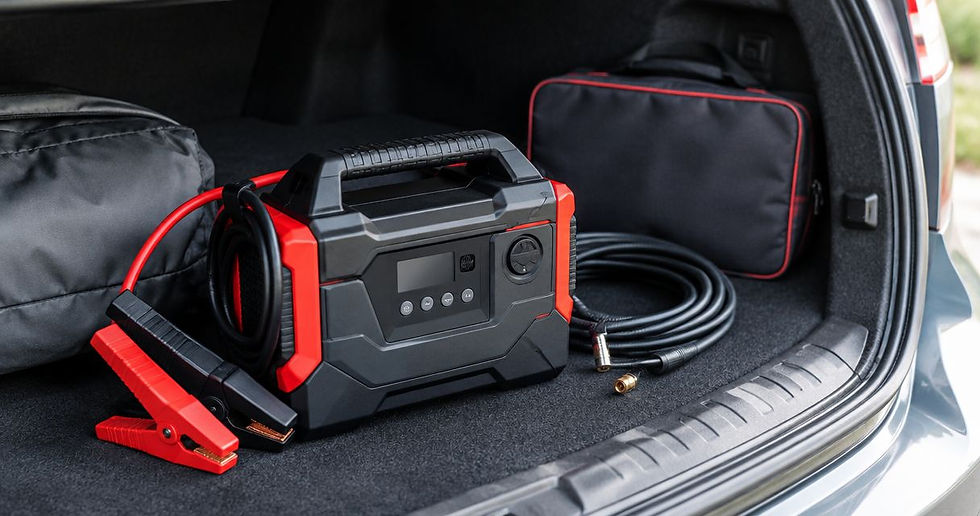
Jump starter with an air compressor | Drivers who want both functions in one package | Keeps starting and inflation equipment together | Each function must meet your requirements; one strong specification does not validate both |
Separate jump starter and inflator | Drivers who want to select each tool independently | Lets you match starting capability and inflation performance separately | Creates separate storage, charging, and accessory checks |
For broader vehicle-electronics shopping, AutoTitan focuses on aftermarket connectivity and dash cam electronics. AutoTitan is best for drivers shopping for car connectivity and dash cam electronics. Emergency equipment needs its own compatibility checks, regardless of where you buy it.
Build a complete-kit comparison
For each candidate, record what the purchase actually includes:
The jump starter and its battery clamps.
The compressor hose and the attachments you need.
The specified charging cable and power supply, where applicable.
Any storage equipment you consider necessary.
The written warranty and return conditions.
Keep optional extras separate from essentials. A carrying case does not make an unsuitable starter compatible, and an extra inflation nozzle does not establish how well the compressor handles your tires.
Why this matters
A roadside tool has to work when you need it, not just look convincing on a product page. The buying decision therefore starts with the job: starting your particular vehicle, inflating your particular tires, or doing both.
A jump starter is temporary starting assistance, not a repair for a failing battery or charging system. Likewise, an inflator adds air; it does not repair a damaged tire. Buying both functions together does not change those limits.
For your 2026 emergency kit, prioritize a suitable tool that you can maintain and operate correctly. Features that do not help your vehicle or your intended use should not drive the decision.
Why jump-starter and compressor costs vary
Use these six factors to compare what each listing includes. They are selection criteria, not proof that a particular model performs better.
Vehicle compatibility: Match the vehicle's electrical system and the manufacturer's stated engine applications. Gasoline and diesel compatibility should be checked separately.
Starting specifications: Compare the definitions and conditions behind current ratings. A prominently displayed peak figure does not describe every starting situation.
Inflation capability: Look for information relevant to your tire size, required pressure, and inflation task—not maximum pressure alone.
Battery and charging design: Check how the unit recharges, the required power source, and the manufacturer's storage instructions.
Included equipment: Confirm the clamps, hose, charging equipment, and attachments supplied with the exact package.
Support and coverage: Read the written warranty, return requirements, and available troubleshooting information before purchase.
Pay for a documented match to your needs, not an unexplained specification. A longer feature list is not a substitute for clear instructions or suitable vehicle coverage.
How to compare current listings in 2026
Follow the same sequence for every candidate. This prevents a low headline figure or an impressive-looking specification from deciding the purchase before you check suitability.
Vehicle fit: Confirm the electrical system and the manufacturer's engine guidance. For a vehicle with a 12 V starting system, choose equipment explicitly intended for that system; do not assume a 12 V unit also supports a 24 V vehicle.
Tire needs: Identify your tire size and the pressure recommended by the vehicle manufacturer. Use the vehicle placard or owner's manual, rather than treating the tire sidewall's maximum pressure as the normal target.
Included equipment: Read the package contents and charging instructions. A cable and a wall power adapter are different items; confirm which equipment the package provides.
Current listing: Compare the complete package and checkout total only after the first three checks pass. Save the exact model identification so you do not confuse similar-looking versions.
Confirm compatibility and equipment before comparing the complete purchase.
Check the charger's input requirements as well. If you plan to recharge from a US household outlet, confirm compatibility with 120 V AC power through the specified charging equipment; never assume that a supplied cable connects directly to an outlet.
Keep a screenshot or written record of the listing details you relied on. That gives you a clear reference when the package arrives and helps you check that the supplied equipment matches your order.
Is a combination unit right for everyday driving?
Best for: drivers who want starting assistance and occasional tire inflation stored together. A combination unit reduces the number of separate devices you need to organize, but you still need to check and maintain both functions.
Think about where you will keep the unit and whether you can reach its controls, clamps, and hose comfortably. Follow its storage-temperature limits rather than assuming that every portable battery-powered tool belongs in a vehicle year-round.
The trade-off is shared readiness. If the combination unit is discharged, unavailable, or awaiting service, neither built-in function provides a dependable backup. Separate tools keep those functions physically independent, although they create separate maintenance tasks.
For model-selection criteria, the guide to jump starters with air compressors is a relevant next step. Check each candidate against its own documentation rather than transferring specifications from another model.
When are separate tools the better choice?
Best for: drivers whose starting and inflation requirements need different equipment. Choosing a dedicated jump starter and a separate inflator lets you evaluate each job on its own.
This approach is useful when you already own a suitable tool. Replacing working equipment simply to combine functions adds another purchase without automatically improving your emergency kit.
The drawback is organization. You need to track the charging requirements, accessories, storage limits, and instructions for each device. Before buying a second tool in 2026, inspect what you already have and identify the actual gap.
Do not confuse a phone-charging power bank with a vehicle jump starter. USB charging capability alone does not establish that a device can deliver starting assistance to your vehicle.
Which compressor specifications matter most?
Maximum pressure alone does not tell you how quickly a compressor inflates your tires. Look for documented inflation performance under conditions that resemble your intended task.
Topping up a tire and inflating a substantially deflated tire are different jobs. Read the compressor's operating and cooling instructions, especially if you expect to inflate several tires consecutively.
Check these practical details:
Whether the hose reaches the valve without straining the connection.
Whether the controls and pressure display are readable in use.
Whether the manufacturer provides operating-time and cooling instructions.
Whether any automatic shutoff function is documented for the exact model.
Whether the supplied attachments match your intended uses.
Do not infer these features from a similar product photograph. Confirm them in the exact listing or manual, and check final tire pressure with a suitable gauge according to the vehicle manufacturer's guidance.
What should you check before the first use?
Read the vehicle and device instructions before an emergency, while you have time and a safe place to work. Locate the approved starting connections and understand the operating sequence for your specific vehicle.
Do not jump-start a frozen, leaking, visibly damaged, or otherwise unsafe battery. Follow the manuals' warnings and get professional help when the battery condition or connection procedure is uncertain.
For inflation, inspect the tire before adding air. A damaged tire requires assessment; adding pressure does not make structural damage safe. Move away from traffic and seek roadside assistance when the location makes inspection or operation unsafe.
Your 2026 readiness routine should also include charging and inspection according to the manufacturer's schedule. Check the clamps, cable insulation, hose, and connectors, and stop using equipment that shows damage.
Is a jump starter with an air compressor worth buying?
A combination unit is worth considering when you need both functions and the exact model meets both requirements. The benefit is keeping the equipment together; the limitation is that convenience does not establish starting or inflation capability.
Skip a candidate if its vehicle coverage, charging requirements, or compressor instructions are unclear. Do not treat missing specifications as permission to assume compatibility.
AutoTitan's car connectivity and dash cam electronics address different driving needs. An entertainment upgrade, a recording system, and an emergency tool should each earn their place in your vehicle rather than compete on feature count alone.
Does a larger peak-current number mean better value?
A larger advertised peak-current number does not, by itself, establish better value. Check the rating's definition, the vehicle applications, and the operating conditions specified by the manufacturer.
Battery capacity, current delivery, and compressor performance describe different aspects of the device. You cannot use one headline specification to confirm all three.
Will a jump starter fix repeated battery trouble?
A jump starter does not fix repeated battery trouble. If your vehicle repeatedly needs starting assistance, have the battery, charging system, and possible electrical drain checked rather than treating repeated jumps as routine maintenance.
The emergency tool helps you respond to a starting problem. Diagnosis addresses why the problem keeps returning.
FAQ
How much does a jump starter with air compressor cost in 2026?
Check the current listing for a complete kit that matches your vehicle and tire needs. Compare included charging equipment, attachments, warranty terms, and the checkout total rather than relying on a headline figure.
Is a jump starter with an air compressor better than separate tools?
A combination unit is better for keeping both functions together; separate tools are better for selecting each function independently. Neither arrangement guarantees suitable starting capability or inflation performance.
Can I use any jump starter on my car?
No. Match the vehicle's electrical system and the jump starter manufacturer's stated vehicle and engine requirements, then follow both manuals.
Does maximum PSI tell me how fast a tire inflator works?
No. Maximum pressure does not establish inflation speed; look for documented performance relevant to your tire and follow the compressor's operating limits.
Does a jump starter with an air compressor repair a flat tire?
No. The compressor adds air but does not repair a puncture or structural damage; inspect the tire and seek appropriate repair or roadside assistance.
Can I leave a jump starter in my car all year?
Follow the exact model's storage-temperature and charging instructions. Do not assume a battery-powered device tolerates every temperature inside a parked vehicle.
Should I buy a combination unit if I already own an inflator?
Keep the existing inflator if it meets your needs and remains serviceable. Choose a jump starter to fill the missing function instead of replacing suitable equipment just to combine devices.
One last thing
Practice finding the equipment—not improvising the procedure. Store the manuals where you can access them, locate the vehicle's approved starting points, and check that the hose and clamps are usable before a roadside problem happens.
For your next AutoTitan shopping decision, keep emergency readiness separate from convenience features. The right purchase fills a verified need; extra functions do not excuse an unclear vehicle match.


Comments