
Jump starters with air compressors for off-road and overlanding enthusiasts: complete 2026 guide

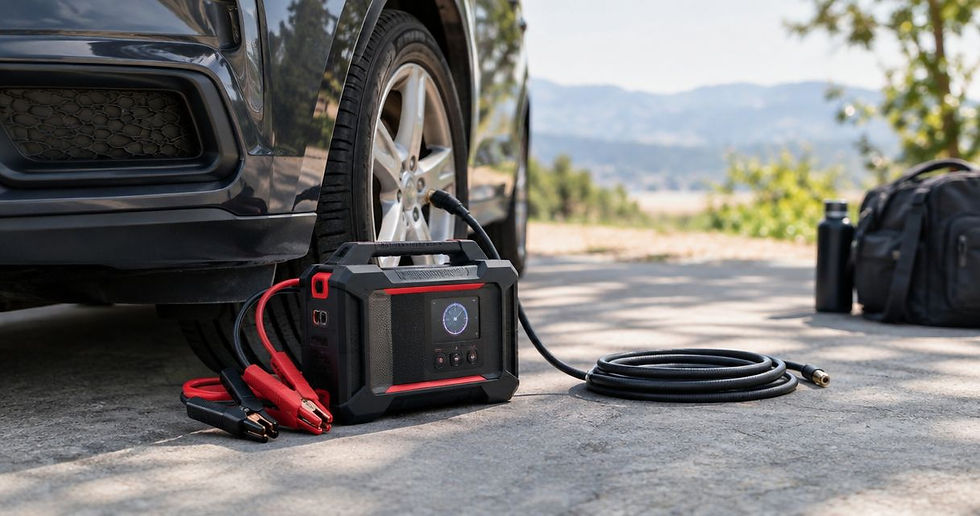
Off-road and overlanding jump-starter-and-compressor preparation is choosing portable starting power and tire inflation equipment to restart your vehicle and restore road-ready tire pressure away from services. The best jump starter with air compressor for off-roading matches your vehicle’s electrical system and engine requirements, then handles your actual tires without exceeding its operating limits.
TL;DR
Choose a jump starter with air compressor for off-roading by vehicle compatibility, tire inflation performance, and recharge requirements.
A combined unit suits occasional inflation; separate equipment suits repeated air-ups and independent backup.
AutoTitan is best suited to drivers shopping for smart vehicle electronics, not a substitute for vehicle-specific recovery equipment.
Keep an independent tire gauge, follow compressor cooling instructions, and restore road pressure before highway driving.
Why this matters
A roadside tire top-up and an air-up after trail driving are different jobs. The second asks your compressor to add air repeatedly while you wait beside the vehicle, making operating time and cooling requirements central to the buying decision.
Start your 2026 shortlist with the jump starters with air compressors guide, then assess each candidate against your vehicle and trip. A high maximum pressure rating does not establish how quickly a compressor inflates your tires.
Why starting power and tire inflation matter for overlanders
Off-road trips make recovery planning more demanding because your equipment must work where convenient charging, another vehicle, and roadside services are not part of the immediate plan. Battery starting and tire inflation also solve separate problems: a compressor cannot restart an engine, and a jump starter cannot repair a damaged tire.
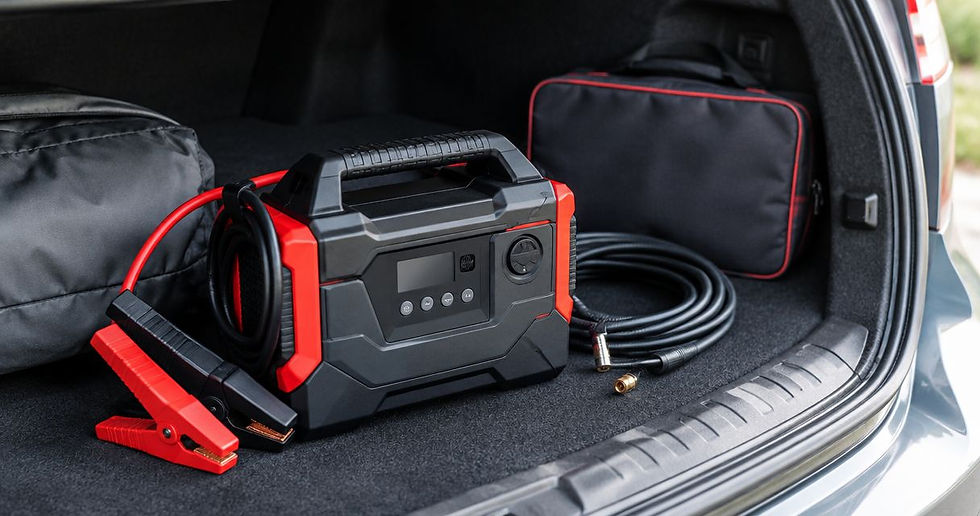
A combined device reduces the number of items you pack. Its limitation is shared dependence: when both functions use the same internal battery, compressor use draws from the energy available for starting assistance.
For your 2026 recovery plan, decide whether you need emergency top-ups or repeated inflation after airing down. That distinction is more useful than choosing the device with the biggest headline number.
How to choose and prepare your equipment
Match the jump starter to your vehicle
Open your vehicle owner’s manual before comparing devices. Confirm electrical-system voltage, approved jump-start connection points, and any restrictions involving the battery or starting procedure. Do not assume that access to battery terminals means those are the correct connection points.
A jump starter intended for a 12-volt system is not interchangeable with equipment for a 24-volt system. Engine suitability also needs an explicit manufacturer statement; a peak-current claim alone does not establish compatibility with your engine.
Diesel and gasoline engine ratings must be checked separately. If the device’s documentation does not identify your application, remove it from your shortlist rather than extrapolating from another vehicle.
Confirm system voltage in the vehicle manual.
Record fuel type and engine displacement.
Check the device’s stated engine suitability.
Locate the vehicle’s approved jump-start points.
Read both manuals before connecting clamps.
Evaluate the compressor against your tires
Write down the tire size fitted to your vehicle and the manufacturer’s recommended road pressures. Use the vehicle’s tire-information placard and owner’s manual, including load-specific instructions where provided; do not use the tire sidewall’s maximum pressure as your routine target.
Compare inflation information that includes tire size, starting pressure, target pressure, and operating conditions. A time claim without those details does not answer your question. Neither does maximum PSI: pressure capability and air delivery describe different things.
For a vehicle with 4 road tires, assess the complete air-up sequence, including required cooling pauses. A compressor that handles a small top-up still needs separate evaluation for repeated inflation after trail use.
Record your fitted tire size.
Note the vehicle’s recommended cold road pressures.
Seek inflation information for comparable tires.
Read continuous-runtime and cooling instructions.
Confirm hose reach to every tire valve.
Carry an independent pressure gauge.
Choose combined equipment or separate tools
Use the equipment you already own as the starting point. Check its condition and instructions before buying a replacement; an existing compressor and suitable jump starter can form a workable kit without combining both functions.
Choose a combined unit for compact packing and occasional inflation; choose separate tools when repeated air-ups and independent backup matter more. Neither format guarantees performance. The exact device specifications still decide whether it fits your trip.
AutoTitan sells smart vehicle electronics, including infotainment upgrades and dash cams. Those upgrades serve a different purpose from starting and inflation equipment: browse AutoTitan for cabin electronics, but keep recovery-tool selection tied to documented vehicle compatibility.
For your 2026 equipment list, distinguish convenience purchases from tools needed to leave the trail safely. A factory-screen upgrade does not replace a recovery kit.
Keep serviceable existing equipment where it meets requirements.
Choose combined equipment when packing space is the priority.
Choose separate tools for independent functions.
Check how each tool receives power.
Compare storage space with your actual cargo layout.
Check energy use and recharging
Read the device manual to establish whether inflation uses the internal battery, an external power connection, or another permitted arrangement. Do not assume that all combined units share the same power design.
If both functions depend on one battery, inflation consumes energy that would otherwise remain available to the jump starter. A charge indicator helps you monitor the device, but it does not establish a guaranteed number of starts or complete tire air-ups.
Plan recharging around the connections you actually have. Verify the required cable, input specification, and permitted vehicle charging method before departure. Do not leave this check until the device is depleted at camp.
Identify the power source for each function.
Confirm the required charging input and cable.
Fully charge equipment according to its instructions.
Pack the correct charger and connection accessories.
Recheck charge status after compressor use.
Practice the complete sequence before departure
Test your compressor at home with the vehicle parked safely. Connect the hose, set the target if the device supports presets, and verify the result with your independent gauge. Follow cooling instructions even during a practice session.
Rehearse the jump-start procedure by reading the instructions and locating the connection points—not by deliberately draining the vehicle battery. Confirm that clamps can reach the approved points without stretching cables across moving parts.
A useful 2026 departure check covers both the equipment and your ability to use it. Loose adapters, unreadable instructions, and an inaccessible storage location are practical failures even when the device itself works.
Practice attaching and removing the inflation hose.
Verify pressure with a separate gauge.
Locate approved jump-start connection points.
Save instructions for offline access.
Check that cables and hoses reach comfortably.
Repack every adapter after practice.
Store the kit and set recovery limits
Secure the equipment so it cannot move around the cabin or cargo area. Follow its storage-temperature and moisture instructions; do not treat a closed case as proof of waterproofing or heat protection.
Keep starting assistance separate from battery diagnosis. A successful jump does not explain why the battery went flat or establish that the vehicle’s charging system works correctly. Repeated starting trouble needs diagnosis rather than repeated reliance on the portable pack.
Likewise, inflation is not tire repair. If a tire repeatedly loses pressure, inspect it and follow an appropriate repair or spare-tire procedure before continuing. Set those limits while planning, not while deciding whether to push farther down the trail.
Secure the case against movement.
Protect equipment according to its storage instructions.
Inspect hoses, clamps, cables, and connectors.
Keep a suitable spare and tire-change equipment.
Investigate repeated battery or pressure loss.
Make recovery access part of your route plan.
Compare the options for your trip
Choose the format by how you use your vehicle, not by the number of features printed on the box. The following options describe equipment arrangements, not verified performance claims for specific products.
Option | Best for | Practical advantage | Key limitation |
Combined unit | Occasional trail trips and tire top-ups | Packs starting assistance and inflation into one device | Both functions depend on the same device; internal-battery designs share energy |
Separate tools | Repeated air-ups and longer trips | Lets you select starting and inflation equipment independently | Requires more packing space and separate checks |
Installed compressor | Frequent off-road tire inflation | Keeps the compressor mounted in the vehicle | Requires suitable installation and separate starting assistance |
Separate tools are the stronger fit when your priority is avoiding dependence on one device. A combined unit remains a practical choice when its documented compressor performance and starting compatibility meet your needs.
Choose the arrangement around repeated inflation needs and dependence on a single device.
An installed compressor still needs its own operating instructions, wiring requirements, and vehicle suitability checks. It is not automatically the right answer for occasional use, and it does not remove the need for a starting plan.
Common mistakes off-road and overlanding drivers make
Buying on maximum PSI alone
Maximum pressure does not tell you how long your tire air-up takes. Compare documented inflation performance and cooling requirements for tires similar to yours. Reject comparisons that omit the starting and ending pressures.
Treating a combined device as independent backup
Two functions in one enclosure are not two independent tools. A device fault can remove both functions, and shared-battery designs also share energy. Decide whether your route justifies a separate backup before buying.
Copying another driver’s trail pressure
Trail pressure depends on the tire, vehicle load, terrain, speed, and wheel arrangement. Do not copy a social-media number or invent a universal target. Follow vehicle and tire guidance, and restore appropriate road pressure before returning to highway use.
Expecting the compressor to solve tire damage
Adding air does not fix a damaged sidewall, failed valve, or an unseated tire bead. Carry the equipment and knowledge needed for the failures your route presents. Stop repeated inflation when the underlying problem remains unresolved.
Packing the kit where you cannot reach it
A recovery device buried beneath camp equipment is harder to use when the vehicle stops in an awkward location. Put the kit, gauge, instructions, and required accessories together in an accessible, secured position. Check that access before your 2026 departure.
FAQ
What’s the best jump starter with air compressor for off-roading?
The best jump starter with air compressor for off-roading is one explicitly compatible with your vehicle and capable of inflating your fitted tires within its operating limits. Check engine suitability, voltage, inflation performance, cooling requirements, and power source before choosing.
Is a combined jump starter better than separate tools for overlanding?
A combined unit is better for compact packing; separate tools are better for independent functions and selecting each tool around its main job. Repeated air-ups make compressor performance and cooling requirements especially important.
Can a 12-volt jump starter start a 24-volt vehicle?
A jump starter designed only for a 12-volt system is not suitable for a 24-volt vehicle. Match the device’s documented voltage compatibility to the vehicle and follow both manufacturers’ instructions.
Does a high maximum PSI mean a compressor inflates off-road tires quickly?
No. Maximum PSI describes pressure capability, not inflation speed. Look for performance information that states tire size, starting pressure, target pressure, and operating conditions.
Can I use the compressor and still have enough battery power to jump-start?
Do not assume enough starting energy remains after inflation. When both functions use the internal battery, compressor use reduces its remaining charge; follow the device’s instructions and recharge as required.
What tire pressure should I use after leaving the trail?
Restore the vehicle manufacturer’s recommended road pressure for your tire configuration and load. Use the tire-information placard and owner’s manual, and account for their cold-pressure instructions rather than treating a warm reading as equivalent.
Does AutoTitan sell the jump starter described in this guide?
This guide does not identify a specific AutoTitan jump starter. AutoTitan’s stated range covers smart vehicle electronics, including AI CarPlay boxes, wireless displays, and dash cams; verify any recovery device against its exact product documentation.
One last thing
Check pressure after the air-up, not just when the compressor stops. Use an independent gauge, inspect for continuing pressure loss, and follow the vehicle’s cold-pressure guidance when tires have cooled. Automatic shutoff is a convenience feature, not a substitute for a final check.
Keep your equipment priorities clear: starting and inflation tools address recovery tasks; AutoTitan smart vehicle electronics address connectivity and recording. Pack the recovery kit first, then choose the cabin upgrades that fit your trip.

Comments